
How to Choose the Right Tile Adhesive for Modern Homes
Premium tiles attract homeowners today as they offer a sense of richness upon installation. Easily found in modern homes, restaurants, and luxurious hotels, options like Hindware Italian Tiles have become an essential element of interior design. When it comes to installation or remodelling, choosing the proper tile adhesive solves common structural challenges by providing flexibility and durability.
A tile adhesive is a formulated bonding agent that fixes tiles to surfaces like walls, floors, and countertops. Because it is water-resistant, it is commonly used in bathrooms, kitchens, and areas with high footfall. Depending on the type of tile installed, like GVT tiles requiring even support or ceramic tiles demanding a stronger grip on vertical surfaces, the bonding agent differs accordingly. Selecting the correct product promises longevity, moisture resistance, and a neat visual finish.
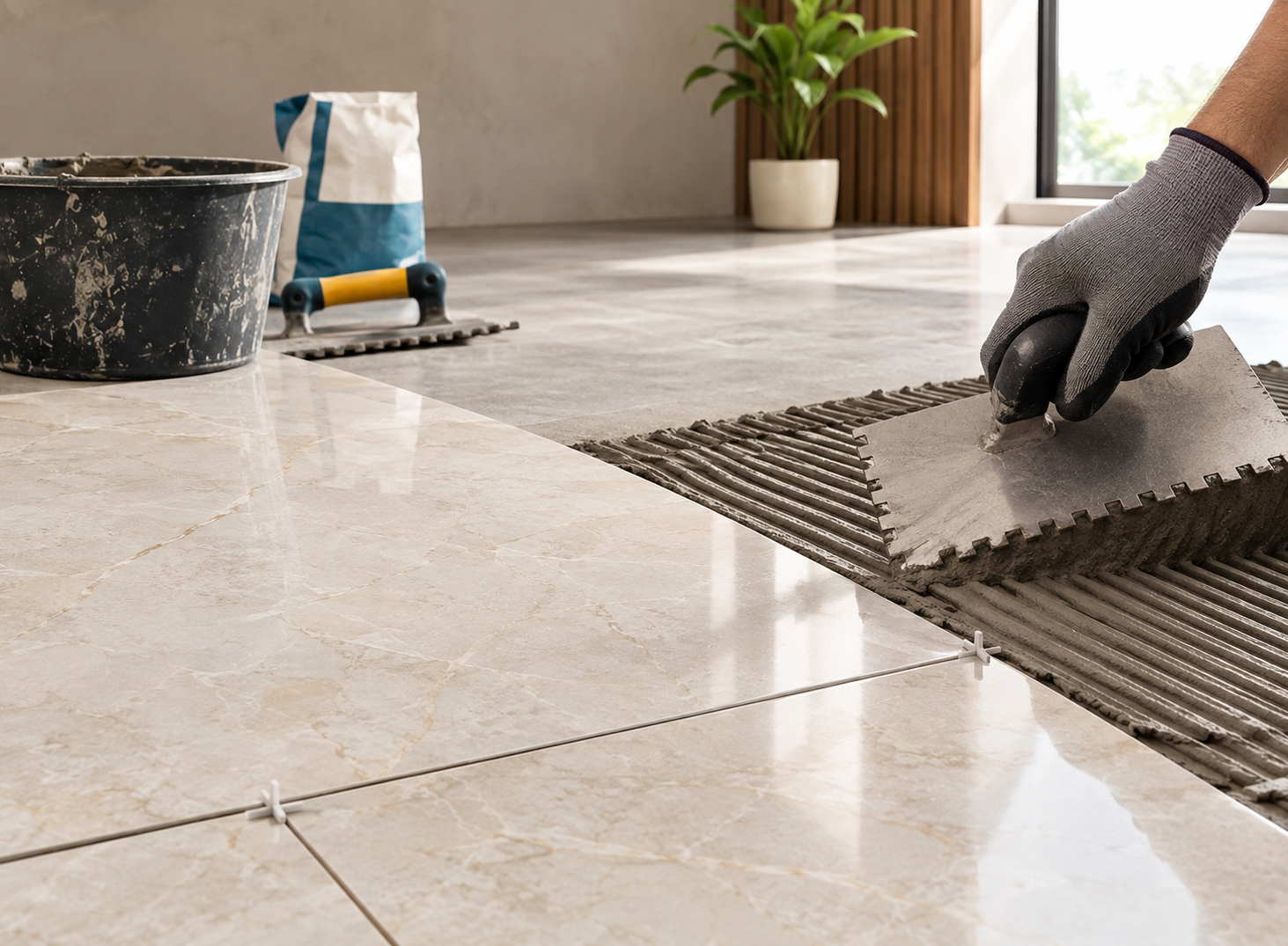
Cement vs Tile Adhesive: Which is Better?
Traditionally, builders used standard cement as a tile fixing agent. Today, contractors rely on polymer-based adhesives because they resist water penetration and ensure greater bond strength.
Ease of Use
Cement requires mixing dry ingredients with water, which is often time-consuming and inconsistent. Tile adhesive comes as a pre-mixed compound that only requires water at a specific ratio, ensuring a smoother consistency and effortless spreading.
Clean Up
Because cement is mixed from raw dry and wet ingredients, cleaning up after application is a laborious process. Adhesives are easier to handle, generating far less dust and job site mess.
Setting Time
Cement has a slower setting time and requires a longer drying period before grouting can begin. Tile adhesive sets faster and allows workers to grout sooner. This helps to complete the project on schedule.
Flexibility in High Traffic Areas
Cured cement is rigid and inflexible, making it prone to cracking under high footfall or structural movement. Formulated adhesives remain slightly flexible, absorbing movement without breaking the bond.
Water-Resistant
Cement is naturally porous and can be damaged by constant moisture exposure over time. Adhesives are formulated to resist water, making them ideal for kitchens and wet room environments.
Over time, polymer adhesives have become the preferred choice over standard cement due to their reliability, flexibility, and straightforward application.
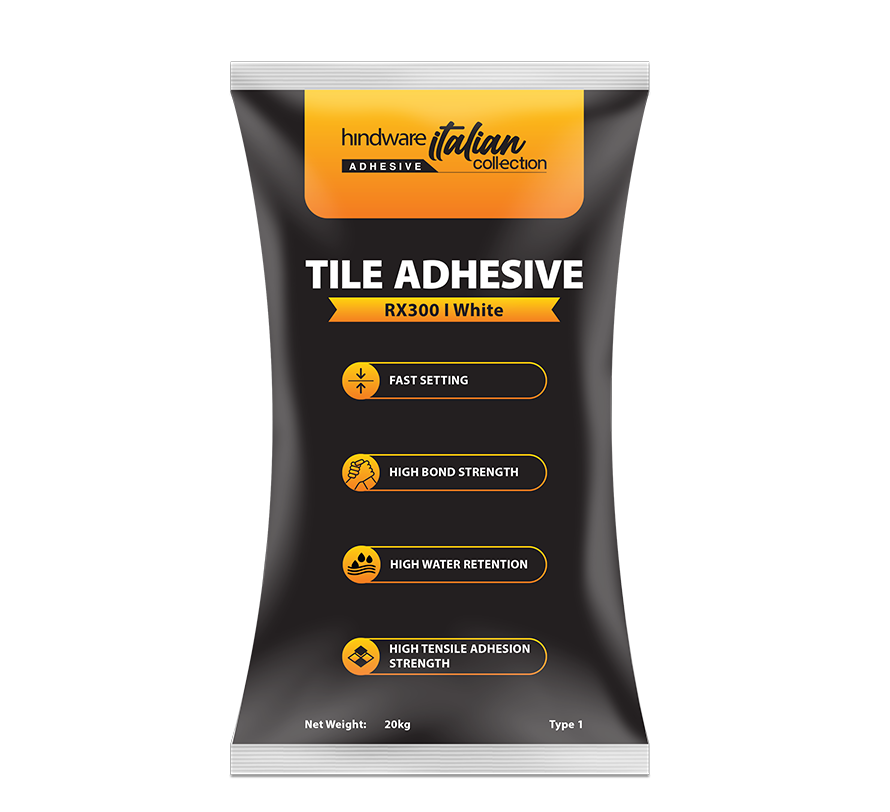
Common Mistakes to Avoid When Applying Tile Adhesive
Using the proper technique keeps everything in place, ensuring that tiles remain crack-free, levelled, and durable for years. Here are common mistakes to avoid during installation.
- The most common error while installing tiles is using the wrong adhesive. Choosing the wrong adhesive can result in poor bonding and early deterioration.
- Sticking adhesive on a dirty, uneven, or rough surface can weaken the layer even before a tile is laid. It is important to ensure that the surface is clean and dry before applying adhesive.
- Tile adhesives are powder-based and require mixing with the correct ratio of water; improper mixing can weaken the bond. Adding too much water weakens the tile, while adding too little dries and hardens the mix. One should always follow the instructions to avoid trouble.
- Grouting is the final step that fills the spaces between tiles, supports alignment, and helps manage minor movement. Grouting before curing can trap moisture.
Selecting the right tile adhesive for your wall and floor tiles ensures long-term stability and strength. From choosing the correct formula to following proper application steps, every detail contributes to a clean, professional result.